
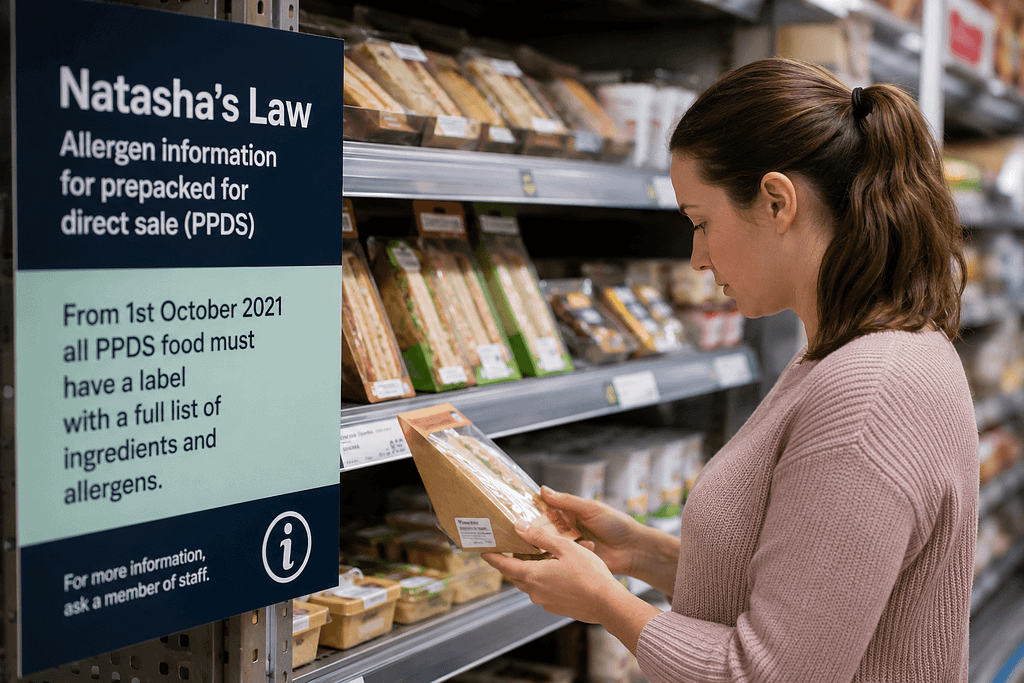
Food allergies continue to be a growing concern across the UK, with increasing focus on food safety, allergen awareness, and safeguarding responsibilities in workplaces and public settings.
One important piece of legislation linked to allergy safety is Natasha’s Law. Since its introduction in October 2021, the law has changed how certain food products must be labelled, helping people with allergies make safer and more informed choices.
The legislation has also increased awareness around the importance of allergy awareness training and safe food handling procedures across many industries and organisations.
What Is Natasha’s Law?
Natasha’s Law was introduced following the death of Natasha Ednan-Laperouse, who suffered a severe allergic reaction after eating a pre packed sandwich that did not clearly display allergen information.
The law requires food businesses and organisations to provide full ingredient lists and clearly highlight any of the 14 major allergens on pre packed food prepared for direct sale.
The aim is to improve transparency and reduce the risk of allergic reactions caused by unclear food labelling.
Who Does Natasha’s Law Apply To?
Natasha’s Law applies across a wide range of workplaces and organisations that prepare and sell pre packed food for direct sale in England, Wales, Scotland, and Northern Ireland.
This may include:
- schools and colleges
- cafés and coffee shops
- bakeries
- supermarkets
- workplace canteens
- hospitals
- care homes
- catering businesses
- convenience stores
- takeaway outlets
The law applies to food that is prepared and packaged on the same premises where it is sold before a customer selects or orders it.
What Foods Are Covered Under Natasha’s Law?
Foods covered under Natasha’s Law are often referred to as pre packed for direct sale products.
Examples may include:
- sandwiches
- salads
- packaged bakery items
- boxed meals
- grab and go snacks
These products must include clear allergen information and full ingredient labelling to help people with allergies make informed decisions safely.

Why Allergy Awareness Is Important
Natasha’s Law has increased awareness around allergy safety across many workplaces and organisations, not only within the food industry.
Any organisation preparing or serving food has a responsibility to consider allergy risks and support safer environments for customers, employees, pupils, patients, or service users.
For people with severe allergies, accidental exposure to allergens can lead to serious medical emergencies, including anaphylaxis.
This is why staff awareness, communication, food safety procedures, and emergency response planning are all important.
The Importance of Allergy Awareness Training
Allergy awareness training helps staff understand how to recognise allergy risks and respond appropriately if incidents occur.
Training may help staff:
- understand common allergens
- improve food safety awareness
- reduce cross contamination risks
- recognise allergic reactions
- follow emergency procedures correctly
Importantly, training also supports organisations in creating safer and more informed environments for both staff and the people they support.
As awareness around allergy safety continues to grow, many workplaces and organisations are reviewing how staff training supports food safety, safeguarding, and risk management responsibilities.
Magpie Training offers practical Allergy Awareness Training designed to support workplaces, schools, healthcare providers, and organisations looking to improve staff understanding of allergy safety and emergency response procedures.