
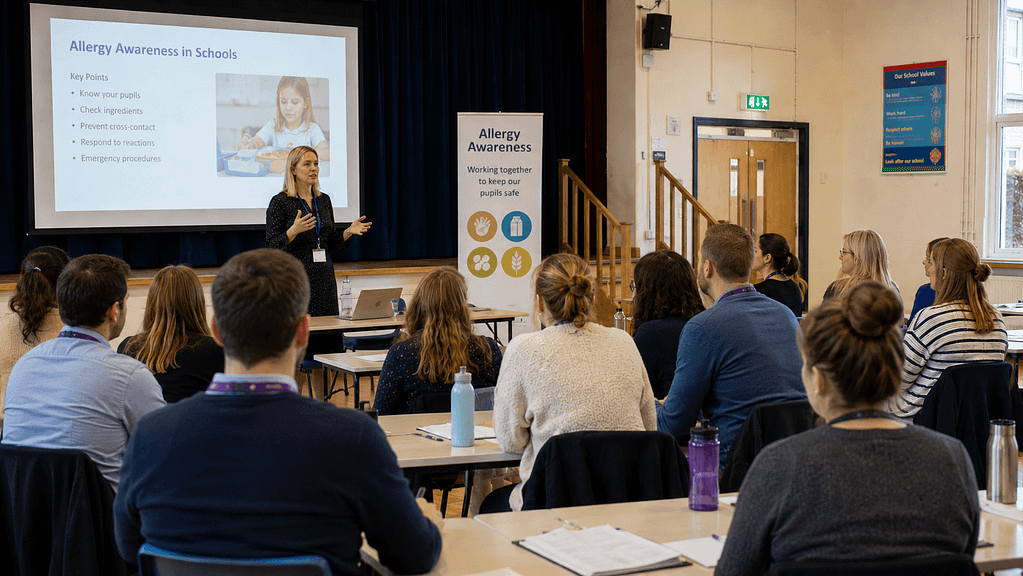
The UK Government has announced stronger protections for children with allergies in schools, placing greater focus on pupil safety, safeguarding responsibilities, and staff awareness across education settings.
As part of the changes, schools in England will be expected to follow updated statutory guidance from September 2026, helping improve allergy management, emergency preparedness, and support for children with medical needs.
The announcement follows growing concern around allergy related incidents involving children and highlights the increasing importance of ensuring staff are properly prepared to respond safely and confidently.
For schools, this is not simply about policies or administration. It is about creating safer learning environments where staff understand allergy risks, recognise allergic reactions quickly, and know how to respond appropriately during emergencies.
Why Allergy Safety in Schools Matters
Food allergies can range from mild symptoms to severe and life threatening anaphylaxis. In some cases, even small exposure to allergens can cause serious medical emergencies.
Schools face particular challenges because pupils eat, learn, and socialise together throughout the day. Shared dining areas, classroom snacks, school trips, and after school activities can all increase the risk of accidental exposure.
For children with allergies, feeling safe at school is essential. Parents and carers also need confidence that education settings can manage allergy related risks appropriately and respond effectively if incidents occur.
As allergy cases continue to rise across the UK, schools are under increasing pressure to ensure staff are properly prepared.
What the New Allergy Protections Mean for Schools
The updated protections place greater emphasis on allergy awareness, communication, emergency planning, and staff preparedness within schools.
The guidance encourages schools to strengthen:
- allergy management procedures
- communication with parents and carers
- emergency response planning
- staff understanding of allergic reactions
- access to emergency medication where appropriate
The aim is to create more consistent approaches to allergy management across education settings while helping schools better support pupils with medical needs.
The updated guidance also reinforces the importance of ensuring staff receive appropriate allergy awareness training as part of a wider safeguarding approach.
What This Means for Teachers and School Staff
Teachers, teaching assistants, lunchtime supervisors, office staff, and support teams are often the first people present when a child experiences an allergic reaction.
Quick recognition and early action can make a significant difference during an emergency. However, many staff members may not feel fully confident identifying symptoms of allergic reactions or understanding the correct response procedures.
Without suitable training, there can be a greater risk of delayed response, confusion, or inconsistent handling of incidents across the school.
This is why many schools are placing greater importance on allergy awareness training as part of their wider safeguarding responsibilities.
Who Needs Allergy Awareness Training in Schools?
Allergy awareness training can benefit anyone working closely with pupils throughout the school day.
This may include teachers, teaching assistants, lunchtime supervisors, safeguarding leads, office staff, school leadership teams, and after school club staff.
Because allergic reactions can happen in classrooms, dining spaces, playgrounds, and during school activities, wider staff awareness helps schools provide safer and more consistent support for pupils.
Why Allergy Awareness Training Is Important
Effective allergy awareness training helps staff build practical knowledge and confidence when managing allergy related situations.
Training can help staff recognise signs of allergic reactions, understand anaphylaxis risks, reduce allergen exposure, and follow emergency procedures correctly.
Importantly, training helps schools move beyond written policies alone by preparing staff for real situations where quick decision making may be required.
This can support both safeguarding responsibilities and overall pupil wellbeing.
Supporting Safeguarding Responsibilities
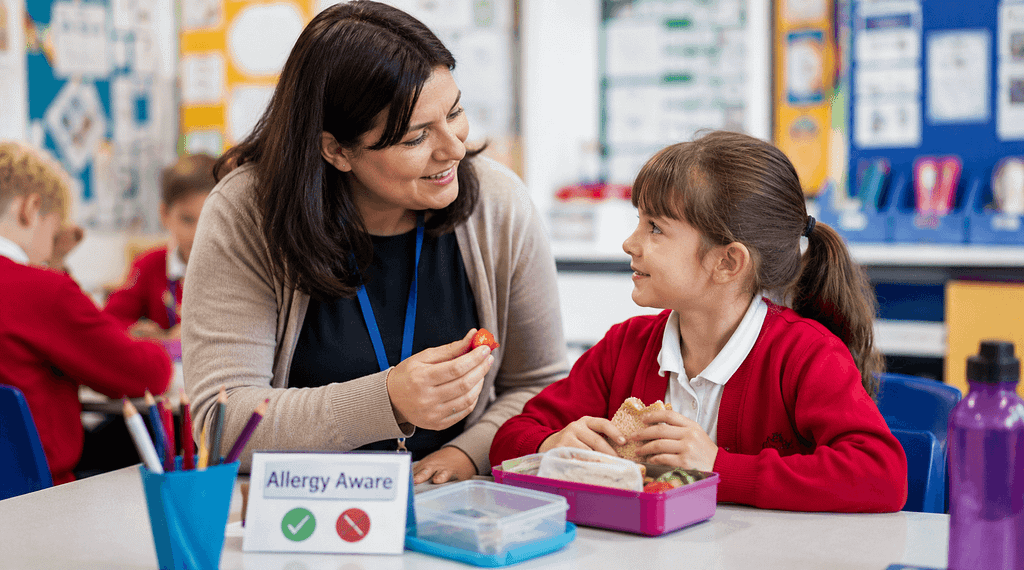
Safeguarding responsibilities extend beyond supervision and behaviour management. Schools also have a duty to protect pupils from avoidable harm, including allergy related medical emergencies.
Children with severe allergies may experience anxiety around food, social activities, or accidental exposure in school environments. Staff awareness and clear emergency procedures can help pupils feel safer and more supported during the school day.
By improving allergy awareness across staff teams, schools can create more inclusive learning environments while strengthening their overall safeguarding approach.
Preparing for the New Guidance
With updated allergy guidance expected from September 2026, schools may wish to review their current procedures and staff training arrangements now.
This includes considering whether staff feel confident responding to allergic reactions, whether emergency processes are clearly understood, and whether allergy procedures are consistently followed throughout the school.
As expectations around allergy safety continue to grow, practical training is likely to play an increasingly important role in helping schools protect pupils and support safeguarding responsibilities.
Magpie Training offers practical courses designed to support schools, education providers, and care settings with allergy awareness training, safeguarding knowledge, and emergency response learning for staff teams.